
Some of my favorite and most interesting games happen in Bracket 2. This is the most common bracket for people to teach the basics of MTG (i.e., attacking, blocking, and the life counter); however, that leaves out one of the most important aspects of the game. Ending it.
You probably have experienced the wins that come out of nowhere. Spells like Craterhoof Behemoth, Akroma’s Will, Torment of Hailfire, and Approach of the Second Sun can feel like getting cheated out of a game for a new player. How do we remedy this issue?
Let’s find some game-winning spells that don’t feel like cheating.
We already established that we want to avoid big, splashy, game-winning spells. Now, do not take me for a hater. I referenced 4 spells that new players may find infuriating, but I have used each of those spells before. One of the defining aspects of Bracket 2 games is how a player will not win out of seemingly nowhere. For those who want to win in this way, the first card that I would suggest is: Breach the Multiverse.
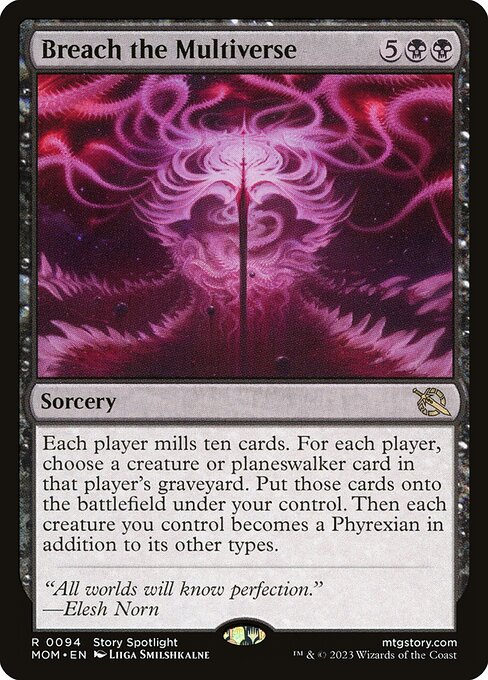
Black Card: Breach the Multiverse
Breach the Multiverse is a great way to establish an advantage by using your opponent’s own cards against them. As the card suggests, casting this spell will result in you becoming Public Enemy Number One, because your board state will show your lead. Reanimating a Ghalta, Stampede Tyrant, or a Maelstrom Wanderer will likely finish the game on their own. In short, you are set to win. Unless your opponents answer you within the next turn cycle, there is nothing that stands between you and victory.
Next up, let’s discuss an option for blue.
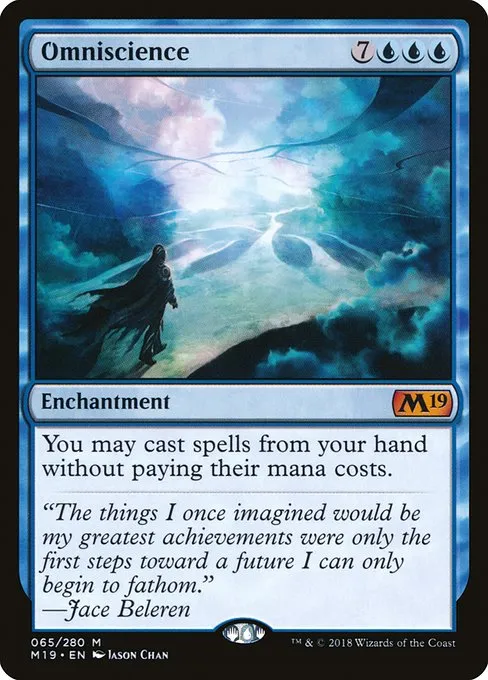
Blue Card: Omniscience
Omniscience might be the right card for the player who likes to win through advantage. Want to play your draw spell? It’s free. Want to counter your friend’s spell? It’s free. Want to win the game basically guaranteed? IT’S FREE! This spell will make you the obvious target for good reason. Chain some spells together to take your opponents down a peg and give you the upper hand.
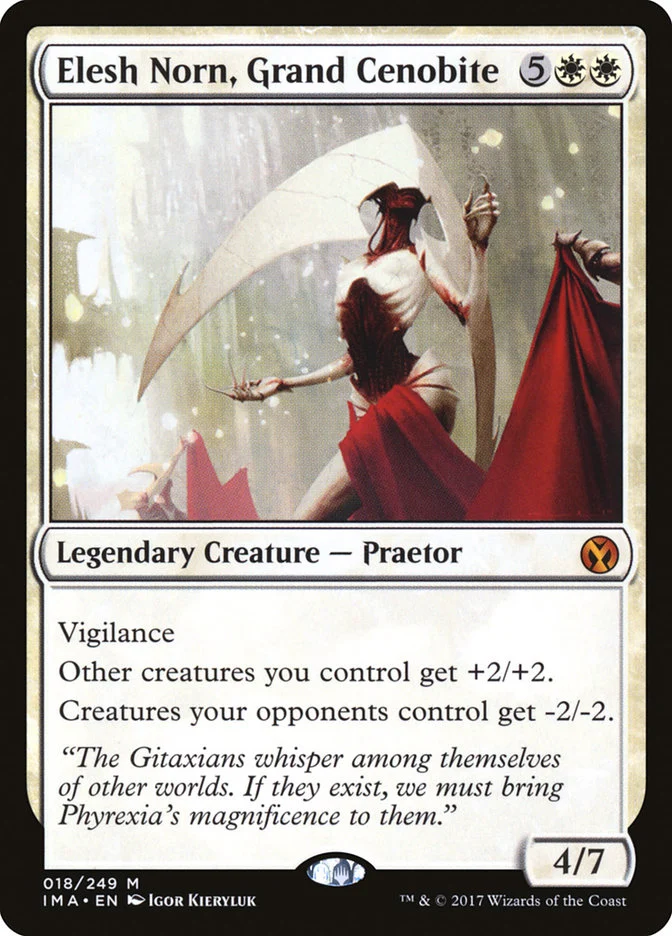
White Card: Elesh Norn
The most common strategy for winning through combat is going wide. Making a big board of 1/1s can be very satisfying, and then Elesh Norn, Grand Cenobite hits the field. Likely, the players will just give up after all their small creatures leave the field. You will likely take out at least one player when you play Elesh Norn, Grand Cenobite, but taking out the two other players is not likely. At the very least, you will present a desperate situation for your opponents. This is a great card for Bracket 2, because your opponents should have about one turn to answer. If not, victory is yours.
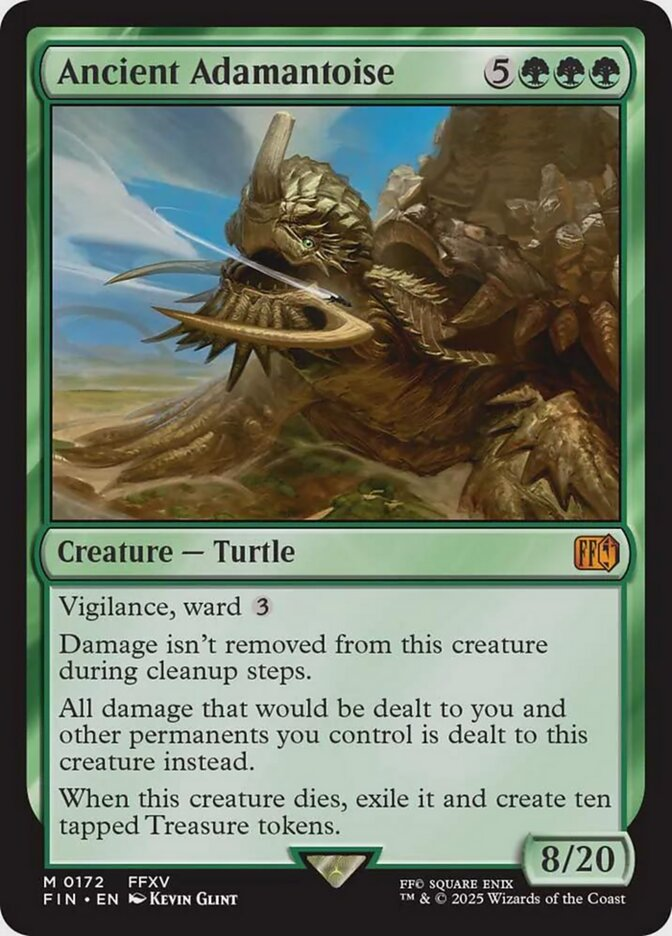
Green Card: Ancient Adamantoise
Ancient Adamantoise is a blocking machine. You will be well protected while it is on the field, but then it leaves the field, and you collect your paycheck. Ten Treasure tokens are enough to make a huge difference in a game.
The basic Green deck wants to spend lots of mana to turn into a win. Ancient Adamantoise will accelerate that game plan and protect you at the same time. In Bracket 2, Ward 3 is almost equivalent to hexproof. Spending a total of four mana to take it out with a Swords to Plowshares is a horrible deal for your opponents.
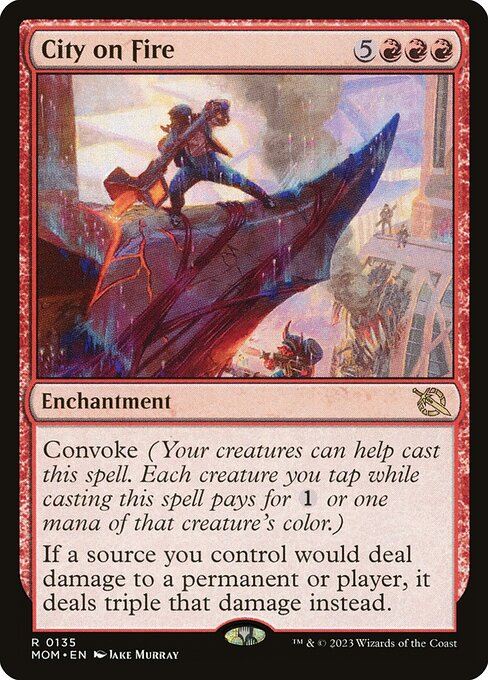
Red Card: City on Fire
Now, City on Fire is a bit of a personal choice and definitely does not go in every red deck. I run this in my Prossh, Skyraider of Kher commander deck. With the Kobolds in play, I can use convoke to pay for a good chunk of the cost and then take out a player using my commander. Done and dusted. I would recommend this for a deck that has lots of little creatures to help with the casting cost, like Krenko, Mob Boss, and Arabella, Abandoned Doll.
IMPORTANT NOTE: DEALING DAMAGE AND LOSING LIFE ARE NOT THE SAME! Trust me. I learned the hard way. Since my Prossh, Skyraider of Kher deck is a sacrifice deck, I used to run more cards like Blood Artist, but I decided to change the build so I could play around this card.
Conclusions: Win Without Removing Their Agency
Understanding the vibes of a Commander pod or LGS is important to selecting appropriate game-winning spells. Strategies like Stax/lockout or Infinite combo can be hard to balance around Bracket 2. Taking away agency = bad vibes for new players. In a similar way, playing a spell that concludes the game on the spot can feel like losing agency. Generally, for Bracket 2 games, there should be a way for others to respond to your actions that does not require a counterspell effect. How do you beat Craterhoof Behemoth? Use Counterspell. How do you beat Torment of Hailfire? Use Counterspell.
Most of the decks that you will face against in Bracket 2 are going to be pre-constructed decks that were freshly bought from the local game store. In the average pre-constructed deck, they will have <1 counterspell effect. Miss Bumbleflower has one counterspell. Kilo, Apogee Mind has one counterspell. The point is: interaction is sparse when it comes to Bracket 2. I remember playing against a guy who used Moat against his girlfriend, who had just started playing. DON’T BE THAT GUY.
When you are selecting your game-winning spells, keep the vibes in mind. Believe me: I think Commander is best played with more interaction. However, casual Bracket 2 is not played that way. Anyway, enjoy winning games and slinging spells.