Whether Magic or Commander… the Best Place to Form MTG Community is Your Friendly Local Game Store.
Most players know that a friendly local game stores sell stuff. Decks. Gear. Single cards. But any business can do that. Heck, Target sells Magic starter decks… are they a FLGS? Of course not.
Because even more than physical things that people use to play, the real difference between local game stores and retailers isn’t what they sell… its what they create.
FLGS focus on building a community. They provide hospitality, friendship, and fun memories. It’s a place where the gaming community doesn’t just shop… it meets, plays, and grows together.
Our love of FLGS is a big reason we created MatchPunk. Without them, I (Bill) never would have fallen in love with Commander. One of our motivations behind the app was to give back something that made events easier for owners, more competitive for players, and just filled up FLGS more often.
Why?
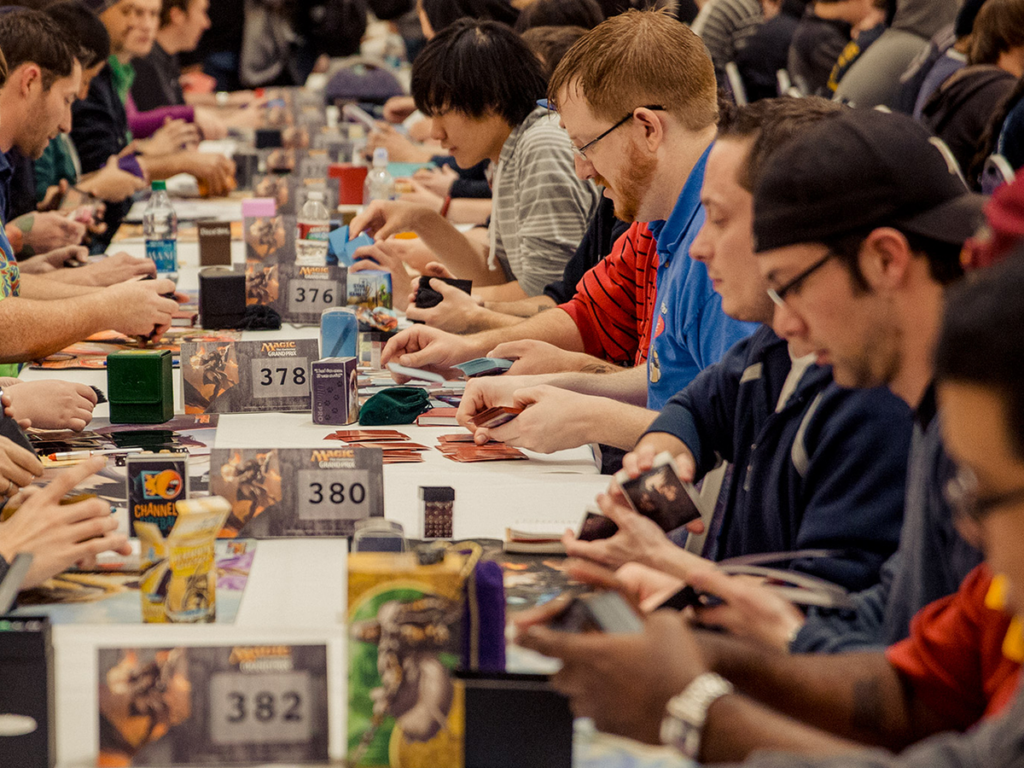
image is not the property of MatchPunk (source)
Because FLGS is the best place to form and find Magic and Commander communities.
But first… what exactly IS “community”?
Apart from being the best comedy TV show ever (“SIX SEASONS AND A MOVIE!!!”), community is defined in two ways:
- 1) “a unified body of individuals… the people with common interests or beliefs, often living in a particular area”
- 2) “a state or feeling of caring about and wanting to interact with others in a group”
In other words, Community is both a THING as well as a FEELING.
Which means, for local mtg stores to create good mtg community, they both have to enable the THING (people with common interests to form a unified body)…
As well as evoke and nurture the FEELING or “community spirit” (a sense of caring and feeling about the members in the community). Shout out to “Spent Glory”, who wrote an awesome post on what makes FLGS special. After you finish this post, definitely check his out here.
This post explains HOW local game stores are the best place to build better magic: the gathering community.
“Do all FLGS create good mtg community?”
Absolutely not. In fact, it is very easy for a local game store to be profitable while ignoring the community-building aspect. Others are quality stores, but focus more on board games or war games. Only the truly GREAT tabletop game stores build a strong local mtg community. Some ways they do that include:
- Offering lots of singles, decks, and mtg gear
- Welcoming atmosphere (“feels like home”)
- Spacious room with plenty of tables
- Helpful and passionate staff
- Food and drink available, yet very clean
- Plenty of events and good hours
To learn more, read our post about what it takes for local mtg stores to be great!
“How are the Commander and Magic Communities Different?”
Standard Magic has been around forever. Tons of cards, history, lore, and endless depths of strategy. As a result, MTG groups are going to care more about player rankings and events. They want to have fun and make friends, but they also take their matches pretty seriously.
Commander community groups are typically more focused on social interaction, creative deck-building, and multiplayer fun rather than strict competition. They often prioritize a balanced and enjoyable experience for the whole group instead of racking up wins.
For the sake of this blog post, “MTG community” refers to both standard and Commander players. To learn more about the differences between the two communities, and the unique player etiquette that comes with each, read our blog post about ______!
MatchPunk Doesn’t Just Make Playing More Fun
It Also Makes it Easier to Join The MTG Community
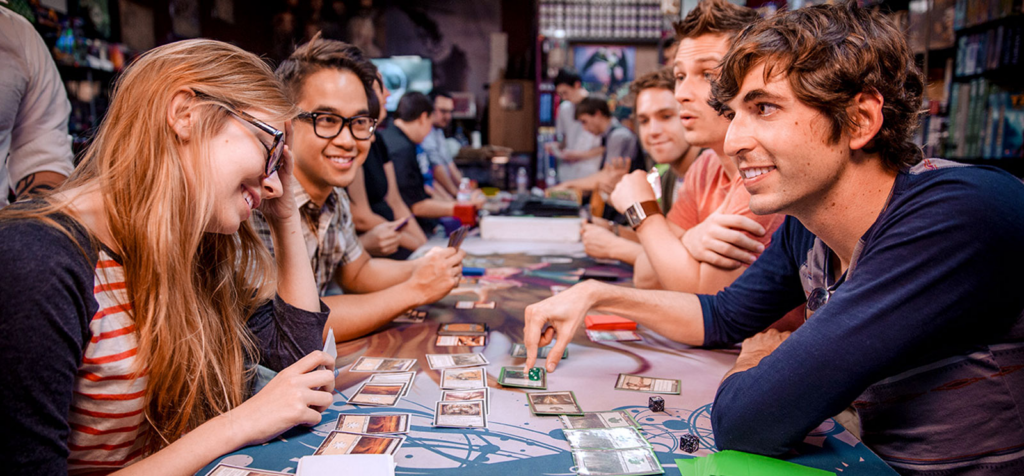
image is not the property of MatchPunk (source)
7 Reasons FLGS Create MTG Community
1) A Central Location to Meet in Person…
Can’t have a community unless there is a place where people can commune! For a lot of players, MTG community is less about the cards and strategy and mostly about spending time with their friends:
- They have a “squad”, “crew”, or “pod”…
- And they like everyone in that “squad”, “crew”, or “pod”…
- And they want to see everyone in that “squad”, “crew”, or “pod”
They already text these people. They share memes. They already keep in touch digitally. What they want is to get together IN PERSON and live some life together.
And the friendly local game store is the hub for all mtg community to gather around. Most local game stores offer dedicated gaming tables for tabletop play, providing a comfortable and convenient space for everyone. This accessibility is a huge advantage for players who don’t have enough room at home.
In our opinion, this is the ultimate reason for a FLGS. Its something big box stores and TCG ecommerce sites can never offer.- And while they could hang out at each others homes/apartments… it’s nice to not have to worry about hosting and just meet up at a “third place”.
And even if they don’t have a group, its way, WAY easier to make new friends in person than online. The very nature of these card games encourages interaction. You form a playgroup with strangers and, over time, you become closer and closer friends.
“What About Connecting When Not in Person?”
Most FLGS will have their own social media pages. Joining is usually as simple as sending a request or clicking a “join” button. They’re perfect for continuing a conversation started in person, asking questions, or organizing another time to play.
But if that’s not the case for your FLGS, there are a variety of large, public social media sites with forums and threads you can join:
- Reddit: Subreddits like r/magicTCG and r/EDH are massive forums for news and deck help.
- Facebook: Numerous private and public groups exist for general MTG discussion, trading, and local meetups.
- Discord: Many communities run dedicated Discord servers for live chat, game finding, and voice calls during online play.
- Nerd Culture: This platform helps you find local playgroups, draft pods, and clubs for free.
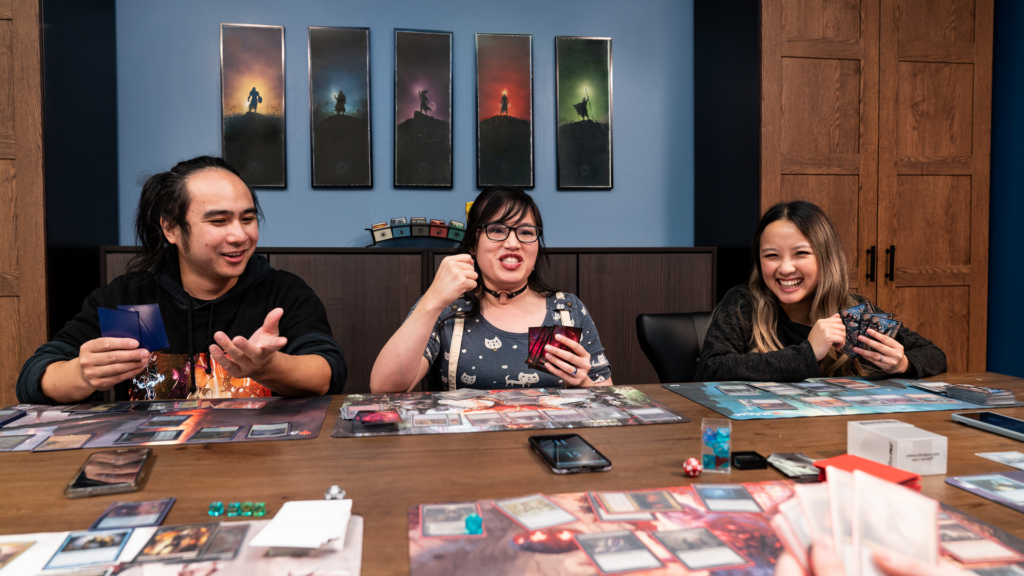
image is not the property of MatchPunk (source)
2) Where Everyone Who Loves MTG…
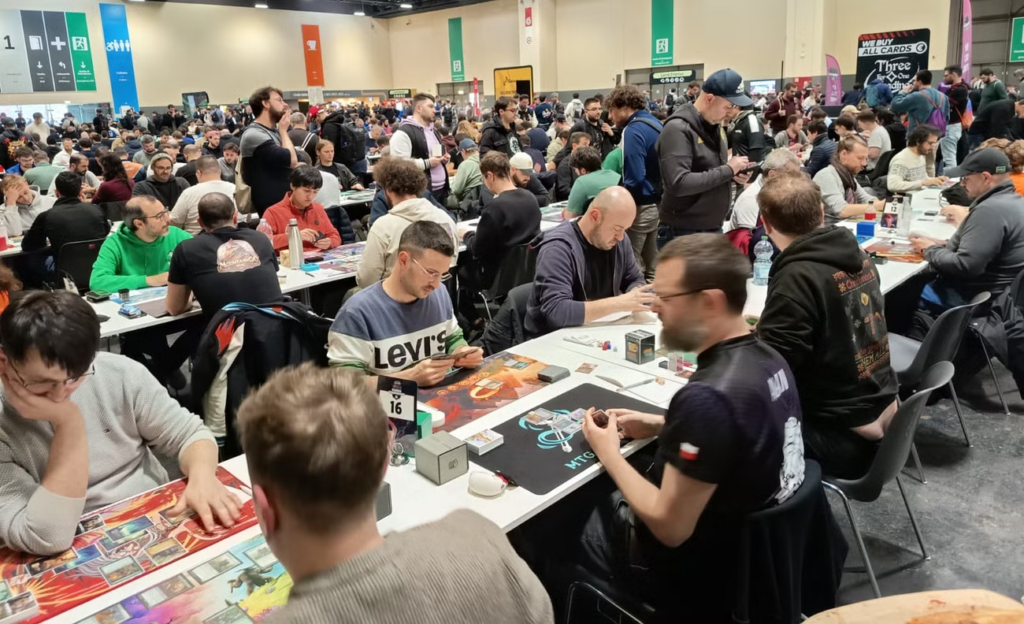
Expanding on point #1… a local mtg score isn’t JUST a place to gather. It’s a place for certain PEOPLE to gather. Particularly, anyone and everyone who plays Magic: The Gathering.
And yes… I mean anyone. That means long-time players with thousands of cards and beginners just starting out with a precon deck. The most social and the most competitive. Diverse backgrounds, skill levels, and perspectives. The broader MTG community contains them all. And the FLGS can be a place that helps people transcend social barriers and form otherwise unlikely friendships.
You see, friendship forms when two people discover shared vision, passion, or interest. And community forms as friendships multiply. And community is solidified when those friendships become strong… and begin to feel like family. This is how a “place” turns into a “home”… and a FLGS becomes a place known for belonging and togetherness. Opponents transform into real-world friendships.
Of course, humans are complicated. With lots of opportunities for conflict. And it’s up to the owner and staff to keep the peace. Determine, outline, and communicate what kind of rude behavior is not tolerated by the FLGS. Find the lines that cannot be crossed. And if they are… even by a regular… enforce consequences. Rules to not limit a community… they identify and protect it. Respect, curiosity, just plain old-fashioned common courtesy make sure the FLGS remains “friendly” to everyone.
- image is not the property of MatchPunk (source)
3) In an Unmatched Gaming Atmosphere…
Having a dedicated place for Magic and Commander players is nice… but a lot less nice if it is a dump. Or too hot or cold. Or too bright or dark. Or too tight and cramped. Or just plain ugly. Or smells like sweat and stains. All these things create an “atmosphere”. And the atmosphere can encourage or discourage community.
Thankfully, most FLGS (or at least the good ones) are the opposite! It’s a welcoming, chill atmosphere where you can kick back and relax. It’s open when you get off work/school. Everyone has the right attitude. Music, food, and play… FUN. Even if the conversation at the average FNM echos with sarcasm, trash talk, and just general “giving each other crap”… it can still
All of these combine into a place where the hobby can THRIVE. It’s not about just enabling people to play Magic and Commander. Its about curating the entire space and experience so that people are motivated and inspired to play. When you’re there, playing MTG feels like the right thing to do! Which fosters long-term health and growth of the entire gaming community.
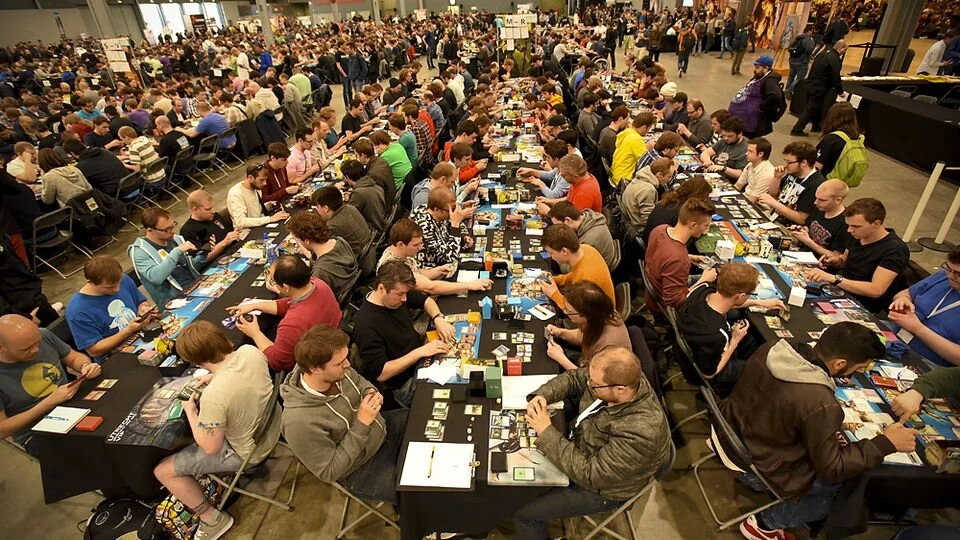
image is not the property of MatchPunk (source)
4) That Furthers the Game…
This is where the “in person” part becomes really important. And what separates a FLGS from some online store or Tabletop Simulator. Because when you play in a FLGS, you not only get to enjoy the mtg community… you extend its reach.
You see, most FLGS offer more than Magic and Commander. Different products and services for different customers. And every time those different customers walk through the door… and see some tables playing Commander… they OBSERVE. They see gameplay. They watch people build decks. They hear laughter and table talk and reactions to amazing moves.
They encounter the mtg community. And everytime such an encounter is made, it’s a chance to grow the hobby. An opportunity to invite them to play. Or to show them how its played. To answer questions, dispel myths, or offer insider tips for getting started.
This isn’t an impossible sell. These are people already interested in tabletop games. They get the gist of it. But there are barriers preventing them from giving it a try. And the mentorship of a welcoming mtg community is all they need to get over the hump.
5) And Contributes To Your Local Community…
This one will be short. Basically, whenever you shop local, the money stays local (over 73%). That’s money that goes to the sandwich shop, mechanic, and dry cleaners. Money that keeps downtowns and neighborhoods alive. Which means participating at your FLGS is a win win: you build mtg community AND help your local economy.
Yes, it’s usually a few bucks more to buy singles at your FLGS. And yeah, you could play for free at home instead of renting a table. But if you want to contribute to not only growing your mtg community… but your community at large… then shopping local is a convenient way to make that a reality.
6) While Being Maintained by a Dedicated Owner
Obviously, there is no FLGS without the FLGS owner. They are the ones stocking the glass cases with singles. They are the ones organizing events. They are the ones maintaining the space. They are the ones hiring and training staff to be friendly and helpful.
And on that same note, a FLGs ability to develop strong mtg community depends on the owner as well. They’ll keep the place open late for regulars. They’ll take extra time out of their day to teach first-timers. They’ll honor any concerned parents with reassuring answers. They’ll step in when an argument over a controversial card gets heated. They’ll keep the calendar packed with social and competitive events.
Now, not EVERY local game store owner is a sparkling personality bursting with sunshine and rainbows. However, very few get into the friendly-local-game-store-business looking to strike it rich. The vast majority simply love tabletop games. And spending their work days obsessing over everything tabletop sounded like a sweet deal. Which is why so many owners go above and beyond.
In summary, the owners LEAD the local game store. Where they lead, the mtg community will follow.
7) Who Rewards and Promotes Fellow Players
Community isn’t a one-time thing. It requires repeated and consistent gatherings. Which means community only forms when people come back. And FLGS offer two things that keep people coming back for more: 1) great rewards and 2) new and exclusive releases.
The friendlier the local game store, the more ways they reward loyalty. Could be special discounts for regular buyers. Could be giving regulars early access to new releases. Or it could be actually lucrative rewards for event winners. Regardless, from the perspective of the mtg community, the benefits never seem to stop. And because of that, they keep coming back.
The other reason to maintain the community? You never know what new release is around the corner. In an awesome post, (spent glory)”explains how a FLGS is uniquely positioned to promote passion tabletop gaming projects:
- Can share on social media
- Offer banners, flyers, and handouts at the register
- Add you to the calendar
- Create custom or private events
- Introduce you to a private, interested audience.
He concludes: “Somebody buying their minis online and running events in a private space has to do all of that work themselves, not to mention that it’s harder to convince somebody new to come out to a Kevin’s garage for an event than it would be to meet at a public space like an FLGS”
MatchPunk is a Brand-New MTG Life Counter App
That Ranks Players’ Wins Within Custom Groups
Making Organizing Competitive FLGS Events Effortless
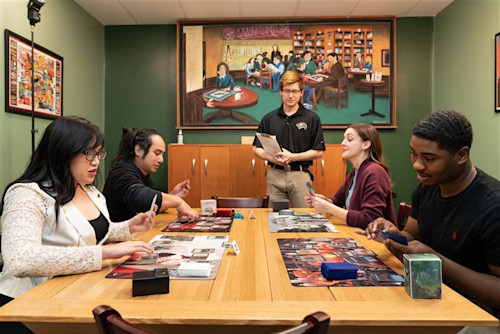
image is not the property of MatchPunk (source)
FLGS and Creating Magic: The Gathering Community (conclusion)
To conclude, I want to return to the definitions of “community”. It is both a THING… but its also a FEELING. Just as there is “school spirit” or a “spirit of friendship”… so too could your MTG community be both a spirit you share in.
Taking the headers from all seven sections, here is how a FLGS builds community: “A Central Location to Meet in Person…Where Everyone Who Loves MTG…3) In an Unmatched Gaming Atmosphere…4) That Furthers the Game… 5) And Contributes To Your Local Community…6) While Being Maintained by a Dedicated Owner7) Who Rewards and Promotes Fellow Players”
And that is only made possible because the FLGS is where people GATHER together:
- They gather in a shared “third place”…
- They gather to exchange ideas and strategies…
- They gather to equip and upgrade decks…
- They gather over shared interests…
- They gather with people they like…
- They gather to share a meal…
- They gather with a common goal…
- They gather to support the hobby itself…
Some places have better food. Others are more spacious with higher-quality tables. And digital forums have more focused discussions. But nowhere else do all these things… things that enable mtg community… take place all at once.
Which is why… when it comes to forming MTG community… nothing compares to your friendly local game store.
Frequently Asked Questions
Q: “What is a local game store?”
A: A local game store is a place in your region, town, or neighborhood that sells tabletop games and anything related to tabletop games. A great quote in this Reddit thread: “The L in LGS stands for Local. My Local Local Game Store is great because they care about building the community as well as making a profit”
Q: “What does ‘FLGS’ mean (What is a “friendly local game store”)?”
A: Just stands for “friendly local game store”. For local mtg stores to succeed, they almost always have to do more than just “facilitate commerce”. They must be welcoming, helpful, and be a place that people can PLAY, not just buy. They support not just trading card games like MTG but also board games, miniatures, and RPGs.
Q: “Can I reserve tables or join events at my FLGS?”
A: Yes, most FLGSs allow you to reserve gaming tables for tabletop play, and they host a variety of events for card games that you can join. It’s best to call ahead or check their schedule online to see what’s available and how to sign up.
Q: “How big is the mtg community?“
A: Literally millions of people play Magic: The Gathering (or some version of it). The lowest estimation is 10 million.
Q: “Is the mtg community toxic?“
A: Not at all. Any community has its “toxic” members: abrasive, combative, elitist, condescending (etc). Nerds can definitely be mean too! But the vast majority of the community is always happy to welcome a new player to the hobby.
Q: “What are the best ways to join the magic community as a new player?”
A: For a new player, the best ways to join the community are visiting your local game store for events, joining beginner-friendly MTG groups on Facebook or Reddit, and using platforms like Discord servers to ask questions and find people to play with.
Q: “Where can I find official news and updates for MTG and Commander communities?”
A: You can find official news, card previews, and event announcements directly on the official Magic: The Gathering website. Signing up for their email newsletter is a great way to get updates sent directly to your inbox for both general MTG and Commander.
Q: “What Should I Talk About to Make Connections?”
A: Once you’ve joined a few groups, you’ll discover a constant stream of engaging conversations and activities. The MTG community is always buzzing with new ideas, strategies, and events. Discussions can range from highly competitive analysis to casual chats about favorite cards.
Typical activities you’ll find in these online spaces help players connect and improve their game. Many groups organize online tournaments or help members coordinate in-person events at local stores. The community is also a great support system for new players looking for guidance.
Common activities include:
- Deck Techs: Players share their decklists and explain their card choices and strategies.
- Trade and Sale Threads: Members post cards they are looking to trade or sell to complete their collections.
- Game Organization: Players use these platforms to find opponents for online games via SpellTable or to organize local Commander nights.
About the Author: This post was written by tabletop games marketing and writing agency Riley James Copy. If you want to create and sell your own magic or tabletop game product, then click the link and learn about how his board game marketing strategy and services can help you sell!
Read More…
Your Field Guide to Finding, Joining, and Building MTG Community
Quick answer: The fastest way into the Magic: The Gathering community is your friendly local game store. Show up to a Friday Night Magic or Commander night, bring a deck you can pilot, and tell the staff you’re new. No FLGS nearby? Online hubs like r/EDH, MTG Discord servers, and SpellTable get you a pod in minutes. Here’s exactly how to do both, plus how to tell a great store from a forgettable one.
The Match Punk FLGS Community Scorecard
Not every game store builds community. Some are profitable card shops that happen to sell Magic; only the great ones turn strangers into a pod. Use this scorecard to judge a store before you commit your weeknights to it. Score each of the seven signals from 0 to 2 (0 = missing, 1 = present, 2 = excellent). A store that totals 11 or higher is worth making your home base.
| Community signal | What a great FLGS does | Your score (0–2) |
|---|---|---|
| Open play space | Dedicated, comfortable tables you can use on event nights without buying in every visit. | |
| A packed calendar | Regular FNM, Commander nights, prereleases, and leagues, not just an empty room. | |
| Welcoming staff | Someone greets newcomers, offers to teach, and starts learning your name. | |
| Clear house rules | Posted expectations that keep the table friendly and rude behavior in check. | |
| A beginner on-ramp | Loaner decks, learn-to-play nights, or precon-friendly pods for new players. | |
| Comfort basics | Clean space, decent lighting, air that isn’t 90 degrees, and snacks or drinks nearby. | |
| Loyalty rewards | Singles deals, early access to new releases, or prizes that reward loyal regulars. |
How to read your score: 11–14 is a true community hub worth making your home base. 7–10 is a solid store with room to grow. Below 7, keep looking. Or, if it’s the only store in town, talk to the owner about the gaps; many simply haven’t been asked. Want the deeper version? We broke down what separates the best stores in 5 Things the BEST Local MTG Stores Have in Common.
Where to Find Your MTG Community: FLGS vs. Online Channels
Your FLGS is the best place to build lasting Magic friendships in person, but online channels are unbeatable for finding a game right now. Most enfranchised players use both: the store for game night, Reddit and Discord for deck help between sessions, and SpellTable when nobody can meet up. Here’s how the main options compare.
| Channel | Best for | In person? | Speed to a game | Beginner-friendly |
|---|---|---|---|---|
| Friendly local game store (FLGS) | Lasting friendships, events, learning face to face | Yes | Slower (event nights) | High, with good staff |
| r/magicTCG and r/EDH (Reddit) | News, deck feedback, rules debates | No | Async | High |
| MTG Discord servers | Live chat, finding pods, voice during play | No | Fast | Medium |
| Facebook groups | Local meetups, trading, buy and sell | Mixed | Medium | Medium |
| SpellTable (WotC) | Playing paper Commander over webcam | Remote paper | Fast | Medium |
| LFG platforms (e.g., Nerd Culture) | Finding nearby playgroups and pods | Leads in person | Medium | High |
One channel deserves a closer look. SpellTable is free, made by Wizards of the Coast, and built for four-player Commander pods. It lets you play paper Magic over webcam with built-in card recognition, so it’s the go-to when your pod can’t meet in person.
How to Join Your Local MTG Community in 5 Steps
Joining is simpler than it feels. Find a store running events, pick a beginner-friendly night, bring a deck you know how to play, tell the staff you’re new, and come back next week. Consistency is what turns strangers into your pod. Most players are genuinely thrilled to welcome a new face at the table.
- Find your FLGS and its event calendar. Check the store’s site or social pages for FNM and Commander nights, or use the official Wizards Play Network store locator to find affiliated stores and events near you.
- Pick a low-pressure entry point. A casual Commander night or a learn-to-play session beats jumping into a competitive event cold.
- Bring a deck you can pilot. A precon or a simple build you understand is perfect. You don’t need the best deck, just one you can play without stalling the table.
- Tell the staff you’re new. Ask them to pair you with a friendly pod. That one sentence skips weeks of hovering awkwardly by the door.
- Show up again. Community forms through repetition. Come back next week and the same faces start becoming friends.
New to the format? 9 Reasons MTG Commander Night is Perfect for New Players is the gentlest on-ramp we know. And once you’re at the table, track your first games with a free MTG life counter so your pod can skip the dice-and-arguments routine and just play.
No FLGS Nearby? How to Build MTG Community From Scratch
No store within driving distance doesn’t mean no community. Plenty of thriving playgroups started in a living room, a library meeting room, or a coffee-shop back table. Pick a regular time and place, recruit three to four players online, set a casual power level, and protect the vibe. A standing weekly game is its own kind of FLGS.
- Recruit a starting pod. Post in r/EDH, local Facebook groups, or a regional Discord. Aim for the three to four players a Commander pod needs.
- Borrow a “third place.” Libraries, coffee shops, community centers, and church halls often host tabletop nights for free. Just ask.
- Set the power level up front. Agree on casual versus cutthroat before deck one so nobody feels ambushed. Our MTG player etiquette guide covers the unwritten rules.
- Go remote when you can’t meet. SpellTable lets your pod play paper Commander over webcam on the nights life gets in the way.
- Keep score and keep it fun. A shared win-loss record turns a loose group into a rivalry worth showing up for, which is exactly what custom groups in Match Punk are built for.
New Player FAQ
Quick, honest answers to the questions new players actually ask before walking into a game store for the first time.
Q: Do I have to spend money at an FLGS to be part of the community?
A: No. Most friendly local game stores welcome players who show up to play, and many let you use tables on event nights without a purchase. Still, the store stays open because people buy there, so picking up singles, sleeves, or a drink when you can is how you keep your community alive. When one of our own local stores was robbed, we saw how fast the community rallied to keep it open.
Q: How often should I go to my FLGS to feel like a regular?
A: Once a week is plenty. A weekly event like Friday Night Magic or a Commander night is what turns unfamiliar faces into your pod. Consistency matters more than frequency; a steady weekly visit beats showing up four times one month and then vanishing.
Q: I’m shy or socially anxious. How do I join a pod without it being awkward?
A: Tell the staff you’re new and ask them to seat you with a relaxed group. That one sentence does the hard part for you. Bring a deck you can pilot so you’re focused on the game, not small talk. Commander nights are especially forgiving because the format is social and slower-paced by design.
Q: What’s the difference between an LGS and an FLGS?
A: They’re nearly the same thing. “LGS” means local game store; “FLGS” adds “friendly,” signaling a store that invests in community, not just sales. Every FLGS is an LGS, but not every LGS earns the “friendly.” That’s the bar the scorecard above measures.
Q: Can I be part of the MTG community if I mostly play online?
A: Absolutely. Plenty of players live in r/magicTCG, MTG Discord servers, and on SpellTable without a regular paper table. Digital play is a real on-ramp, and if you ever want the in-person side, your FLGS is the bridge from screen to table.
Q: How do I find a Commander pod at my local game store?
A: Ask the staff when Commander night runs and have them point you to an open pod, or watch for tables of four and ask to join the next game. Commander players are usually happy to add a fifth to the rotation. A deck you can pilot and a relaxed attitude is all the invitation you need.
Key Takeaways
FLGS build MTG community because they combine a physical third place, regular events, welcoming people, and rewards for coming back. No single online channel offers all of that at once. To plug in: find a store that scores well on the seven community signals, show up weekly to a beginner-friendly event, and bring a deck you can pilot. No store nearby? Build your own pod online and meet on SpellTable.
Match Punk makes joining and running game night easier. Track life, commander damage, and counters for every format, and rank wins inside your own custom pod or store group, all free. Try Match Punk free.